When Crohn's Steals Your Life: A Hopeful Look at Food, Inflammation, and Healing
Living with Crohn's disease can feel like losing yourself piece by piece. But according to practitioners like Dr. Joel Wallach and Dr. Amy Myers, the foods you eat may be fueling the fire — and changing them may be the most powerful step you can take.

When Crohn's Steals Your Life: A Hopeful Look at Food, Inflammation, and Healing
There's a particular kind of exhaustion that comes with Crohn's disease.
It's not just the pain — though the pain is real. It's not just the unpredictability — though that steals your confidence in ways that are hard to explain to someone who hasn't lived it. It's the slow erosion of the life you used to have. The trips you stopped taking. The meals you stopped enjoying. The mornings you woke up already dreading the day.
If that sounds familiar, this article is for you.
We're not here to offer a cure. We're not here to replace your doctor. What we are here to do is share a perspective that many people with Crohn's have never heard — a perspective rooted in the work of practitioners like Dr. Joel Wallach and Dr. Amy Myers, who believe that the body was designed to heal, and that what we eat plays a far more powerful role in gut inflammation than most of us have been told.
You Are Not Broken
Before we go any further, let's say this clearly: having Crohn's disease does not mean your body has failed you.
Dr. Wallach spent decades studying the relationship between nutrition and chronic disease. His central argument — one that has resonated with millions of people — is that the human body is remarkably capable of healing and maintaining itself when it has the raw materials it needs to do so.
When those materials are missing, or when the gut is constantly under attack from foods it cannot tolerate, the body struggles to keep up.
That's not weakness. That's biology.
Dr. Amy Myers, a functional medicine physician and author of The Autoimmune Solution, takes a similar view. She describes Crohn's as part of a spectrum of autoimmune and inflammatory conditions that are deeply connected to the health of the gut lining — and she believes that healing the gut is often the first step toward calming the immune system's overreaction.
Neither practitioner claims to have a universal cure. But both offer a framework that gives people with Crohn's something they often desperately need: a sense of agency.
The Gut Lining: Your Body's First Line of Defense
To understand why food matters so much in Crohn's, it helps to understand what's happening inside the gut.
Your intestinal lining is a single layer of cells, just one cell thick, stretched across roughly 20 feet of digestive tract. Its job is to act as a selective barrier — letting nutrients in while keeping harmful substances out.
In a healthy gut, this barrier is tight and intact. In Crohn's disease, that barrier becomes compromised. The tight junctions between cells loosen. Partially digested food particles, bacteria, and toxins slip through into the bloodstream — a phenomenon Dr. Myers calls "leaky gut."
When the immune system encounters these foreign particles in the blood, it does what it's designed to do: it mounts an attack. But in Crohn's, that immune response doesn't turn off the way it should. The inflammation becomes chronic. The gut lining stays damaged. And the cycle continues.
Dr. Wallach's perspective adds another layer to this picture. He argues that the gut lining — like every other tissue in the body — requires specific nutrients to repair and maintain itself. Zinc, for example, is essential for cell division and wound healing. Vitamin D plays a critical role in regulating immune function. Omega-3 fatty acids help modulate inflammation. When these nutrients are deficient, the gut's ability to heal itself is compromised.
The question both practitioners ask is: what if we addressed the root conditions instead of just managing the symptoms?
Gluten and Crohn's: A Connection Worth Exploring
One of the most consistent themes in Dr. Myers' work is the role of gluten in gut inflammation.
Gluten is a protein found in wheat, barley, and rye. For people with celiac disease, gluten triggers a severe autoimmune reaction. But Dr. Myers argues that even for people without celiac disease, gluten can be a significant source of gut irritation — particularly for those with already-compromised intestinal barriers.
She explains that gluten triggers the release of a protein called zonulin, which loosens the tight junctions in the gut lining. In someone with a healthy gut, this may be a minor, temporary effect. But in someone with Crohn's, whose gut lining is already under stress, this added permeability can fuel the very inflammation they're trying to calm.
Dr. Wallach's perspective aligns with this. He has long advocated for removing gluten from the diet as a foundational step for anyone dealing with chronic digestive issues, arguing that modern wheat in particular has been modified in ways that make it harder for the human gut to process.
Neither practitioner claims that removing gluten will cure Crohn's. But many people who have tried it report a meaningful reduction in symptoms — fewer flares, less bloating, more predictable digestion.
It's a perspective worth considering. And the only way to know if it applies to you is to try.
Other Foods That May Fuel the Fire
Gluten isn't the only food that may contribute to gut inflammation in Crohn's. Dr. Myers identifies several other common culprits that she recommends removing during a gut-healing protocol.
Dairy is high on the list. Many people with Crohn's have difficulty digesting lactose, and the proteins in dairy — particularly casein — can trigger immune responses in sensitive individuals.
Refined sugar and processed foods feed harmful bacteria in the gut and promote inflammation throughout the body. Dr. Wallach has spoken extensively about the role of processed foods in depleting the body of essential minerals and disrupting the gut microbiome.
Nightshades — tomatoes, peppers, eggplant, and white potatoes — contain compounds called lectins and saponins that some practitioners believe can irritate the gut lining in sensitive individuals.
Alcohol is a direct gut irritant that increases intestinal permeability and disrupts the microbiome. Most practitioners working in this space recommend eliminating it entirely during a healing phase.
The key insight here is not that everyone with Crohn's reacts to all of these foods. It's that your gut may be reacting to some of them — and the only reliable way to find out is through a systematic elimination process.
What an Elimination Diet Can Do for You
An elimination diet is not a punishment. It's a conversation with your body.
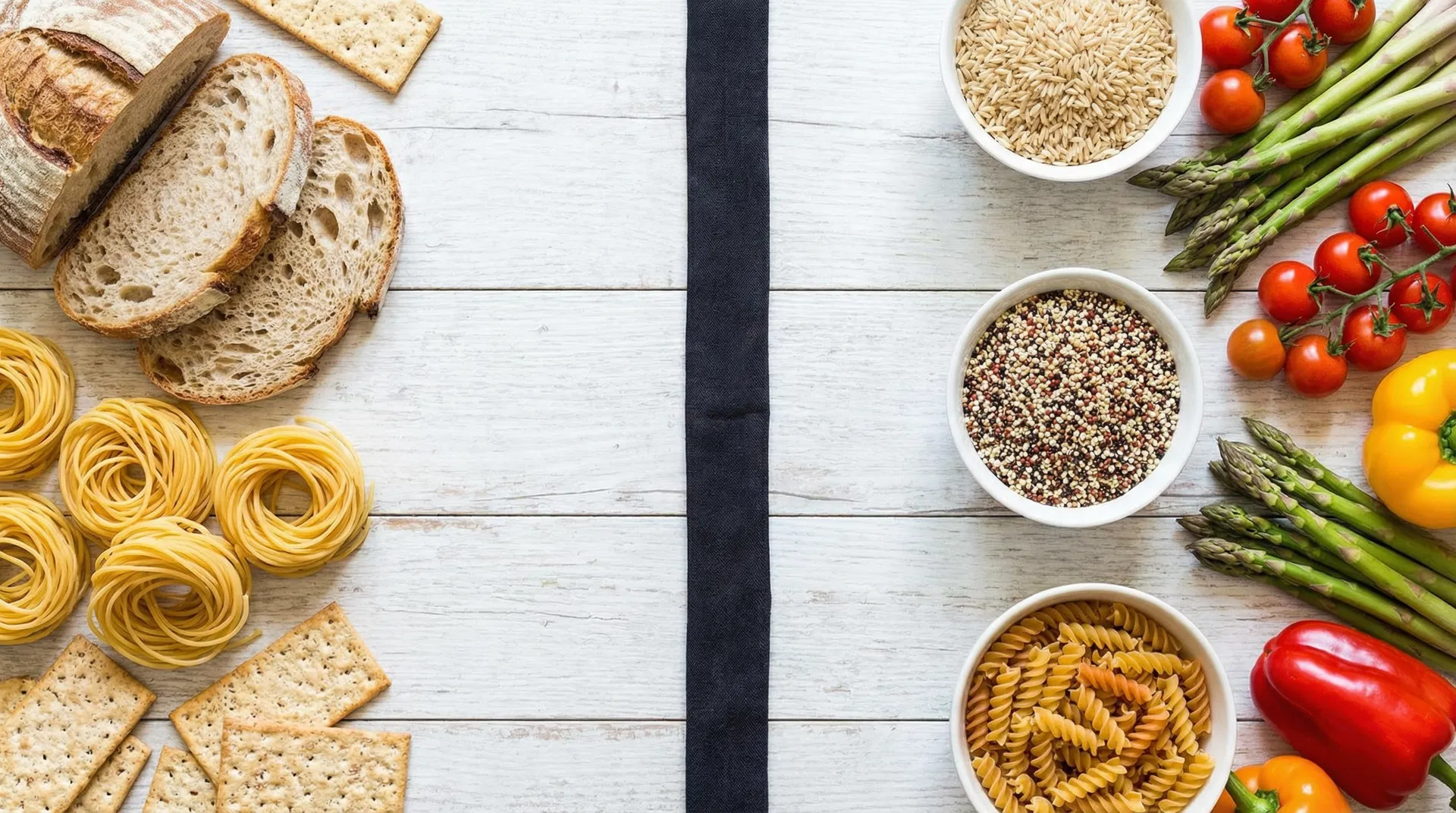
The basic principle is simple: remove the foods most likely to cause inflammation for a defined period of time — typically three to four weeks — and then reintroduce them one at a time, watching carefully for reactions.
What makes this approach so valuable for people with Crohn's is that it removes the guesswork. Instead of wondering whether that flare was caused by stress, or the weather, or something you ate three days ago, you get clear, observable data about how your body responds to specific foods.
Dr. Myers describes the elimination diet as the gold standard for identifying food sensitivities — more reliable than most blood tests, and far more personalized than any generic dietary advice.
The process isn't always easy. The first week can feel restrictive. You may miss foods you love. But many people who commit to it describe a turning point — a moment, usually in the second or third week, when they realize they feel better than they have in years.
That moment is worth working toward.
A Story Worth Telling
Marcus was 34 when he was diagnosed with Crohn's disease. For the first two years, he cycled through medications, managed flares as they came, and tried to accept that this was simply his life now.
Then a friend introduced him to the concept of a gut-healing elimination diet.
He was skeptical. He'd already tried cutting out spicy food and eating more fiber. It hadn't helped. But he was tired of feeling like a passenger in his own body, so he decided to give it a real try — four weeks, no gluten, no dairy, no processed food, no alcohol.
The first two weeks were hard. He missed pizza. He missed beer. He felt like he was constantly reading labels.
But by week three, something shifted. The urgency that had ruled his mornings began to ease. He slept through the night without waking up in pain. He went to a family dinner and actually enjoyed the meal.
When he reintroduced gluten in week five, his symptoms returned within 48 hours. When he reintroduced dairy, the same thing happened.
Marcus isn't "cured." He still has Crohn's. He still works with his gastroenterologist. But he now has a map of his own body — a clear understanding of which foods inflame him and which ones support him. And that knowledge has changed everything.
Practical Steps You Can Start Today
You don't have to overhaul your entire life overnight. Here are six gentle, practical steps you can take right now to begin supporting your gut.
Start a food and symptom journal. Write down everything you eat and drink, and note how you feel two to four hours later and the following morning. Patterns will begin to emerge within a week or two.
Remove gluten for two weeks and observe. You don't have to commit to forever. Just try two weeks without wheat, barley, and rye, and pay attention to how your gut responds.
Prioritize gut-soothing foods. Bone broth, cooked vegetables, sweet potatoes, and easily digestible proteins like chicken and fish are gentle on an inflamed gut.
Reduce sugar and processed food. Even small reductions can make a meaningful difference in gut bacteria balance and inflammation levels.
Consider a high-quality probiotic. Dr. Myers emphasizes the importance of rebuilding a healthy gut microbiome as part of any healing protocol.
Protect your sleep. Dr. Wallach has spoken about the critical role of sleep in cellular repair. The gut lining repairs itself primarily during sleep. Prioritizing seven to eight hours of quality rest is one of the most powerful things you can do for your gut health.
A Word About Medical Care
Everything in this article reflects the perspectives of functional medicine practitioners like Dr. Wallach and Dr. Myers. It is not medical advice, and it is not a substitute for working with a qualified healthcare provider.
Crohn's disease is a serious condition that can lead to significant complications if not properly managed. If you are experiencing severe symptoms, significant weight loss, blood in your stool, or signs of obstruction, please seek medical attention promptly.
The ideas shared here are meant to complement your medical care — not replace it. Many people find that working with both a gastroenterologist and a functional medicine practitioner gives them the most comprehensive support.
There Is Hope Here
Living with Crohn's can feel isolating. The disease is invisible to the people around you, but it is relentless in its presence. It shapes your decisions, your relationships, your sense of who you are.
But here is what we want you to hold onto: your body is not your enemy.
It is working as hard as it can with what it has been given. And when you begin to give it what it needs — the right foods, the right nutrients, the right environment for healing — remarkable things can happen.
Dr. Wallach believed this with conviction. Dr. Myers has seen it in her patients. And thousands of people who have walked this path before you have found that the body, when properly supported, has a profound capacity to heal.
You may not be able to control everything about Crohn's. But you have more influence over your gut health than you may realize.
That's where hope lives.
If you're curious about the elimination diet and want a clear, step-by-step guide to doing it properly, our Elimination Diet Protocol walks you through the entire process — from which foods to remove, to how long to wait, to how to reintroduce foods safely.
We also have a free Symptom Tracker you can download to help you spot patterns in your food and symptom journal.
You don't have to figure this out alone.
This article is for educational purposes only and reflects the viewpoints of functional-medicine practitioners like Dr. Joel Wallach and Dr. Amy Myers. It is not medical advice. Consult a licensed healthcare professional before making personal health decisions.
Ready to Identify Your Food Triggers?
Get our comprehensive elimination diet guides, meal plans, and symptom tracking tools.
Comments
No comments yet — be the first to share your thoughts!